Buying is always easy the hard part is to buy the right thing from the right person. Two tents can look similar in a photograph and still behave very differently in different weather conditions and that all comes down to the materials, one of them sagging and leaking, the other still standing as good as new. This guide walks through everything worth knowing before you commit: what separates a quality tent from a cheap one, how to size a tent for your event, what affects price, and how to keep a tent in good condition for years.
Start With the Type of Tent You Need
Tents made in Uganda fall into a handful of broad categories: event and party tents, wedding and bridal tents, church and school tents, camping tents, exhibition tents, and business-use covers like car shades and carports. Each is built differently for its purpose, so it's worth being clear on your use case first. For a full breakdown of each category, see our guide to tent types made by Kampala manufacturers.
What Actually Makes a Tent "Quality"
The fabric
Most Ugandan manufacturers use either heavy cotton canvas or PVC-coated polyester for the tent cover. Canvas breathes better and feels more traditional, which is why it's still common for camping and some church tents, but it needs proper waterproofing treatment to perform well in the rainy season. PVC-coated fabric is more uniformly waterproof and easier to clean, and has become the standard choice for event and wedding tents because it holds its shape and colour longer under Kampala's sun. Ask specifically whether the fabric is UV-stabilised, since untreated material fades and weakens noticeably faster.
The frame
Galvanized steel tubing is the standard for tent frames built to stay up for more than a single event, because the zinc coating resists the rust that untreated steel develops fast in Uganda's humidity. Lighter aluminum frames are common on portable gazebos and smaller tents where weight matters more than long-term outdoor exposure. Whatever the material, check the joints and connectors; a frame that flexes or rattles when you shake it isn't going to hold up well in wind.
Stitching, welds, and finishing
Seams are usually where a cheap tent fails first. Double-stitched or heat-welded seams on the cover, and properly welded (not just bolted) joints on the frame, tend to last far longer than the cheaper alternatives. It's reasonable to ask a manufacturer to show you a finished tent or a sample panel before you order.
Choosing a Tent for an Event or Wedding
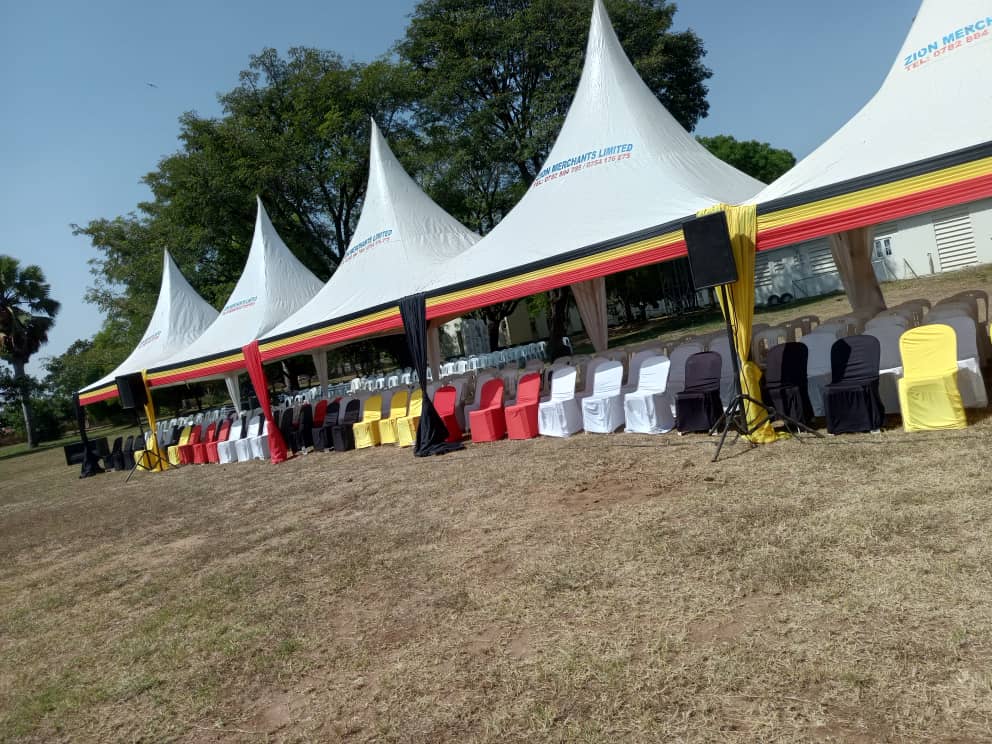
For weddings and send-offs, most Kampala manufacturers offer bridal canopy tents for the couple's table alongside larger seating tents for guests. Decide on your guest count first, then work backwards to size, since an undersized tent is the most common complaint event hosts have after the fact. It's also worth asking whether the manufacturer can supply or coordinate chairs, tables, and decor, since several do this as a package.
Choosing a Tent for Camping
Camping tents prioritise weight and packability over size, since they need to be carried and pitched by hand. Look for a tent rated for the conditions you'll actually face: rainfly coverage for Uganda's sudden downpours, decent ventilation for warm nights, and a groundsheet that resists moisture coming up from below. Smaller manufacturers and outdoor gear retailers around Kampala stock these alongside the larger event-tent makers.
Choosing a Tent for Business Use
Businesses typically need tents for a different reason than events: protecting vehicles, stock, equipment, or staff from the weather on an ongoing basis. Car shades and carports use a similar frame-and-cover construction to event tents but are built for semi-permanent installation, while industrial PVC covers and tarpaulins are sized to fit warehouses, construction sites, or vehicle fleets. Exhibition tents, often used at trade fairs, tend to prioritise branding (printed panels, company colours) alongside weatherproofing.
Tent Sizes and Seating Capacity
Manufacturers in Kampala generally describe event tents by how many seated guests they hold, since that's the most useful number for planning. As a rough guide:
| Tent Description | Typical Use |
|---|---|
| Small canopy / gazebo | Bridal table, VIP seating, small home functions |
| 50-seater | Small home functions, intimate church gatherings |
| 100-seater | Mid-sized weddings, school events, church services |
| 150 to 200-seater | Large weddings, crusades, corporate functions |
| Multiple linked tents | Large-scale events, exhibitions, government functions |
Most manufacturers can also custom-build outside these standard sizes, so don't assume you're limited to a fixed list if your guest count falls in between.
What actually Affects the prices of Tents
Tent prices in Uganda vary by manufacturer and change with the cost of imported PVC and steel, so we won't quote fixed figures here. What consistently drives the price up or down is the size of the tent, the fabric type (PVC generally costs more than basic canvas), the frame material and finish, whether you want branding or printing added, and whether you're buying outright or hiring for a single event. The most reliable way to budget is to request quotes from two or three manufacturers for the exact size and spec you need, since this also gives you a sense of who is over- or under-pricing relative to the market.
Renting against Buying
Renting makes sense for a one-off event, since most manufacturers and event-hire companies bundle the tent with chairs, tables, and setup labour. Buying makes more sense if you'll need a tent repeatedly, such as a church, school, venue, or business, since the cost of repeated rentals usually overtakes the price of owning one within a year or two. A buyer also gets to choose exact branding and sizing rather than working with whatever a hire company has in stock.
How to actaully keep a Tent in Good Condition
- Dry it before folding away: Storing a wet PVC or canvas cover encourages mould and weakens the fabric over time.
- Check the frame for rust spots: Touch up any chips in the galvanized coating before they spread, especially after the rainy season.
- Avoid dragging the fabric: Small tears at the edges grow quickly once the fabric is under tension again.
- Re-tension guy ropes and pegs: A loose tent flaps in wind, which stresses both the seams and the frame joints.
- Ask about a warranty: A manufacturer confident in their work will usually stand behind seams and frame welds for a defined period.
Frequently Asked Questions
How long should a quality tent last?
A well-made PVC event tent with a galvanized frame, properly maintained, can reasonably last several years of regular use. Cheaper materials or unprotected frames tend to show wear within a single rainy season.
Can a tent be custom branded?
Yes. Most Kampala manufacturers offer printing or panel branding for corporate clients, churches, and schools, usually at an added cost depending on the size and complexity of the design.
Do I need a site visit before ordering?
For larger tents, a site visit helps the manufacturer confirm ground conditions, access, and the exact size that will fit your space, and several Kampala manufacturers offer this for free.
Ready to Get a Quote?
Chrishma Tents manufactures event, wedding, church, camping, and business tents with free site visits across Kampala, Namboole, and Bweyogerere, and installation in as little as 48 hours.
Get Your Free QuoteYou might also like our overview of tents in Uganda, our breakdown of tent types made by Kampala manufacturers, or our list of the Top 10 tent manufacturers in Kampala.